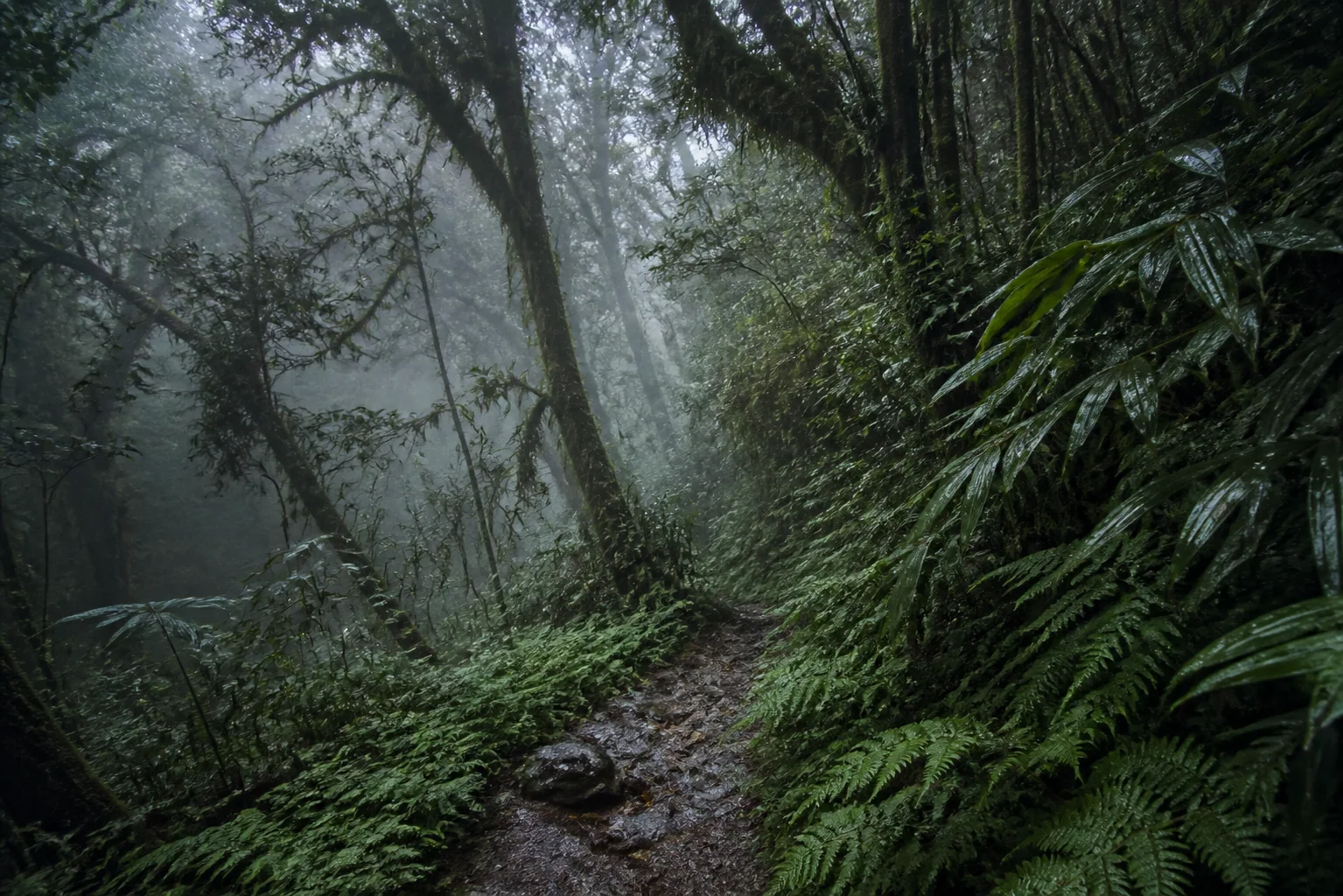
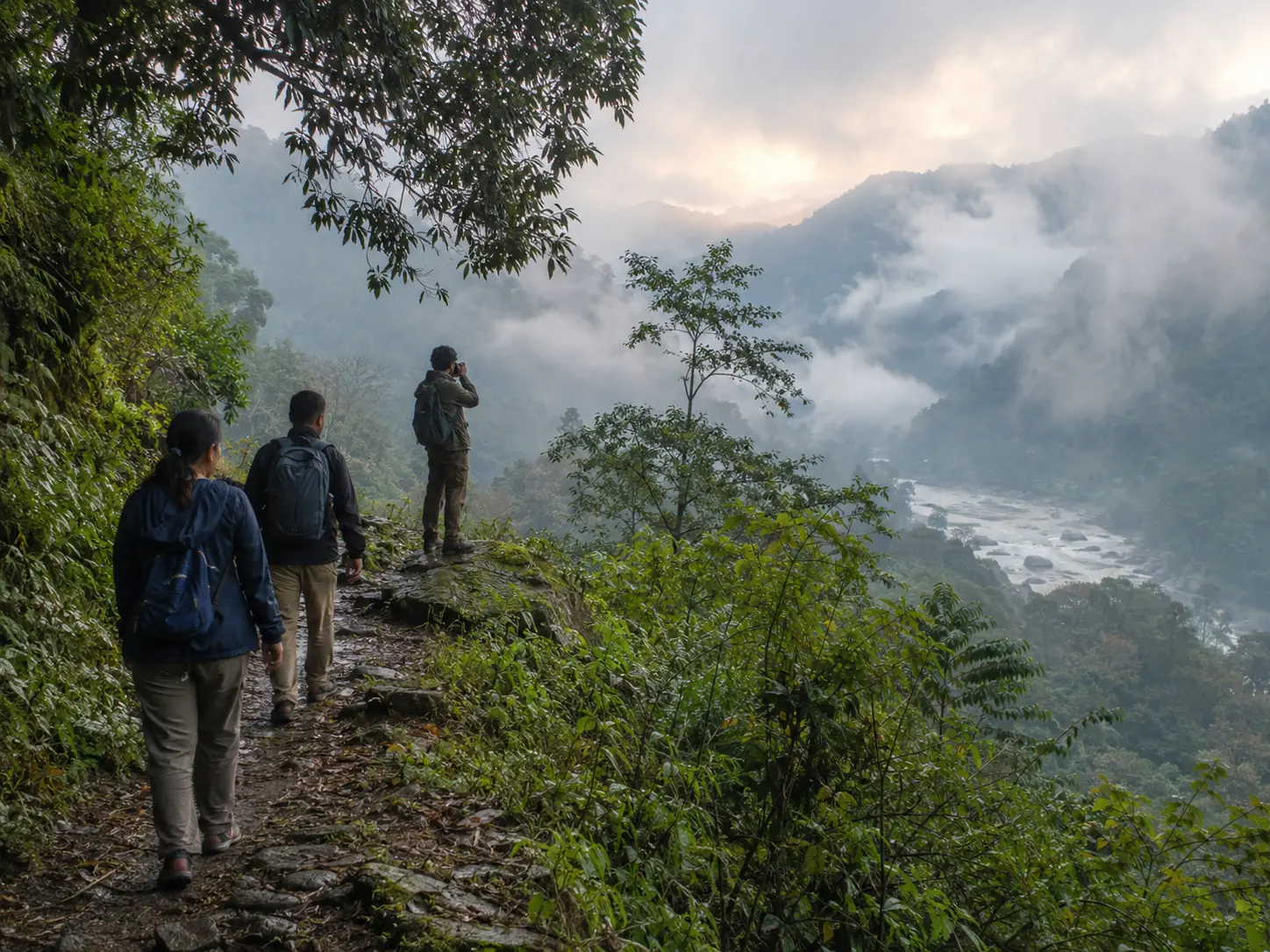
A small Kalimpong village does not need to compete with a famous viewpoint. Its gift is the gradual intimacy of cloud, forest, kitchen smoke and unhurried attention.
Why this kind of place
The destination is not a monument
Passabong belongs to a kind of Himalayan travel that is easy to misunderstand. There may be no single attraction that justifies a rushed arrival and a photograph. What it offers is accumulation: forest edges, changing cloud, local food, a road falling away into silence and the way conversation deepens when nobody is hurrying to the next stop.
This does not mean there is nothing to do. It means doing and noticing are not forced apart. A walk can be both activity and orientation; a meal can be both nourishment and an introduction to the people hosting you.
Arrive while the place is still visible
Mountain roads ask for daylight. Plan the transfer so the final section happens before dark, especially in rain or winter fog. Arrival then becomes part of the experience: you understand the slope, where your room sits, what the morning may reveal and how far you are from the nearest settlement.
If delays happen, tell the host early. A slower, safer arrival is always better than treating the last bend like a deadline.
A village reveals itself at the speed of repetition: the second cup of tea, the same bend at dusk, the face that recognises you on day two.
Walk with context
A local walk is richer than a generic ‘nature trail’ because names, uses and memories attach to what you see. Ask about farming, water, seasonal movement, older routes and the plants around homes. Listen without turning every encounter into content.
Photography should follow consent, particularly around people, houses and work. The best travel portrait is often the one made after a conversation rather than before it.
Leave one morning unclaimed
Do not schedule every sunrise. Weather may close the view and open the forest instead. Tea may lead to a story. Somebody may suggest a short path that was not in the itinerary. Slow travel is not inactivity; it is the capacity to respond.
When you leave, the memory is less likely to be a list of completed points. It may be one quality of light, a song after dinner, or the strange spaciousness of having stayed put.
Arrive before dark, stay at least two nights, walk with a local person and let one unplanned morning remain the centre of the trip.