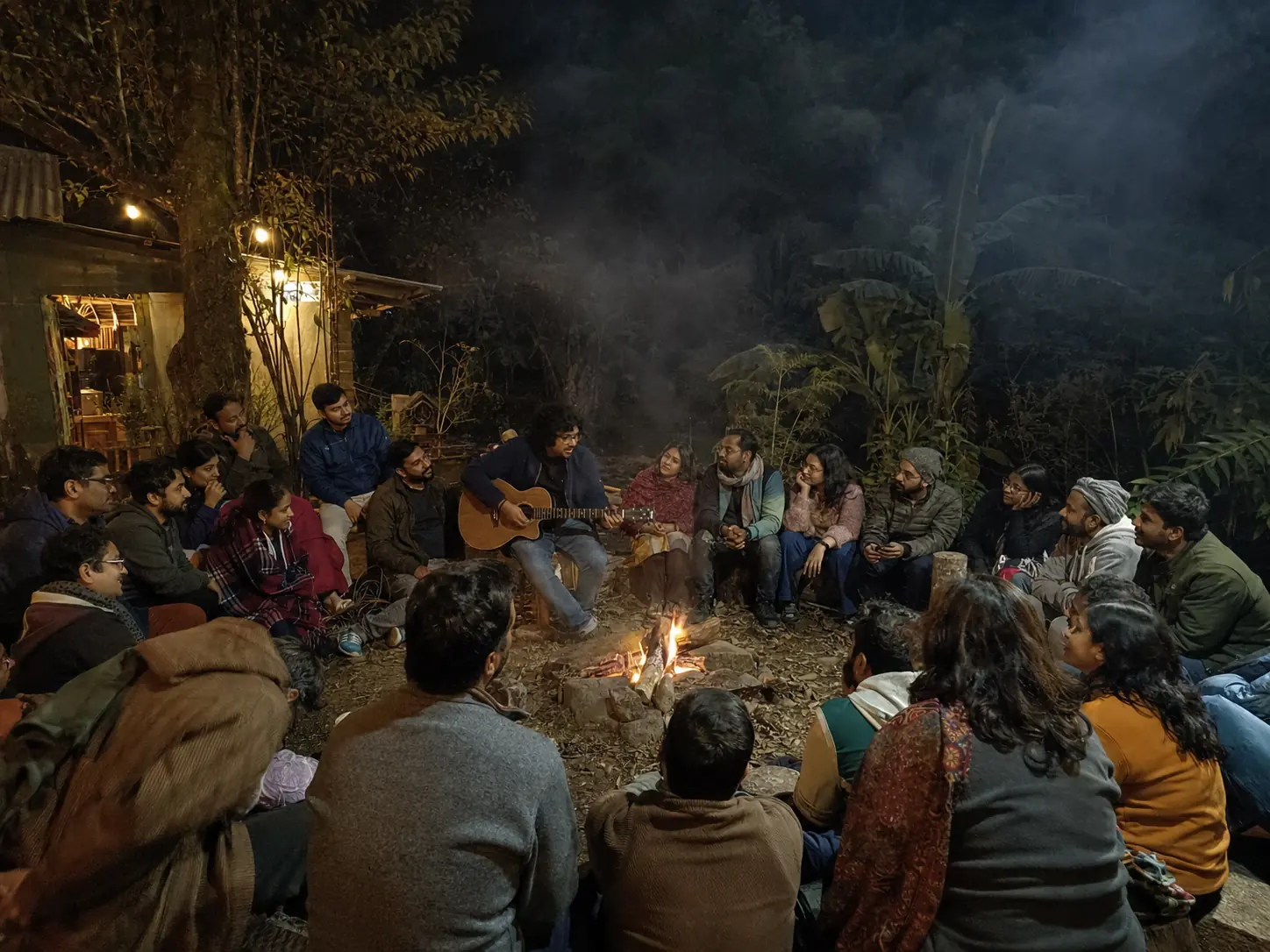

Real camping includes cold air, unfamiliar sounds and fewer walls. It can still be warm, hygienic, clearly hosted and surprisingly restful.
Expectation setting
Ask what ‘camping’ means at this exact site
Camping can mean carrying your own shelter into a remote landscape, or sleeping in a prepared tent close to facilities. Neither is more authentic by definition. Before booking, ask about tent size, occupancy, mattress, bedding, toilet type, bathing, lighting, charging and the distance between sleeping and common areas.
Also ask who remains on site overnight and what the plan is for weather or a medical issue. Clear information reduces anxiety and lets you decide from reality rather than from an aesthetic photograph.
Warmth comes from underneath too
First-time campers often focus on blankets and forget that cold transfers from the ground. A suitable mat or mattress matters. Change into completely dry sleep clothes, keep tomorrow's clothes inside the tent and use clean socks reserved for night.
Do not overdress until you sweat; moisture later makes you colder. Use breathable layers and keep a warm cap accessible when the temperature drops.
Adventure begins at the edge of familiarity, not at the point where basic care disappears.
Night sounds are information, not automatically danger
Water, wind, insects and branches sound larger without walls. A short site orientation helps: where the toilet is, which lights stay on, whom to call and what not to leave outside. Once the practical unknowns are removed, the soundscape can become one of camping's deepest pleasures.
If you are a light sleeper, carry earplugs—but try listening for ten minutes first. The mind often settles once it recognises repetition.
Bring a small ritual from home
A familiar scarf, a book, tea in your own mug or a five-minute skincare routine can bridge the unfamiliar. Comfort is not the enemy of adventure; it gives the nervous system enough safety to remain open.
Tell the organiser in advance about allergies, medication timing, mobility concerns, sleep apnoea, food needs or fear that may affect the night. Good hosting is collaborative, and early information is easier to act on than midnight improvisation.
Ask exactly what is provided, bring one personal comfort ritual, and tell the host about sleep, mobility or medical needs before arrival.